
The Complete Guide to Painting Interior Trim, Baseboards, and Doors
Everything homeowners should know about preparation, paint products, sheens, application, and achieving beautifully finished interior woodwork.
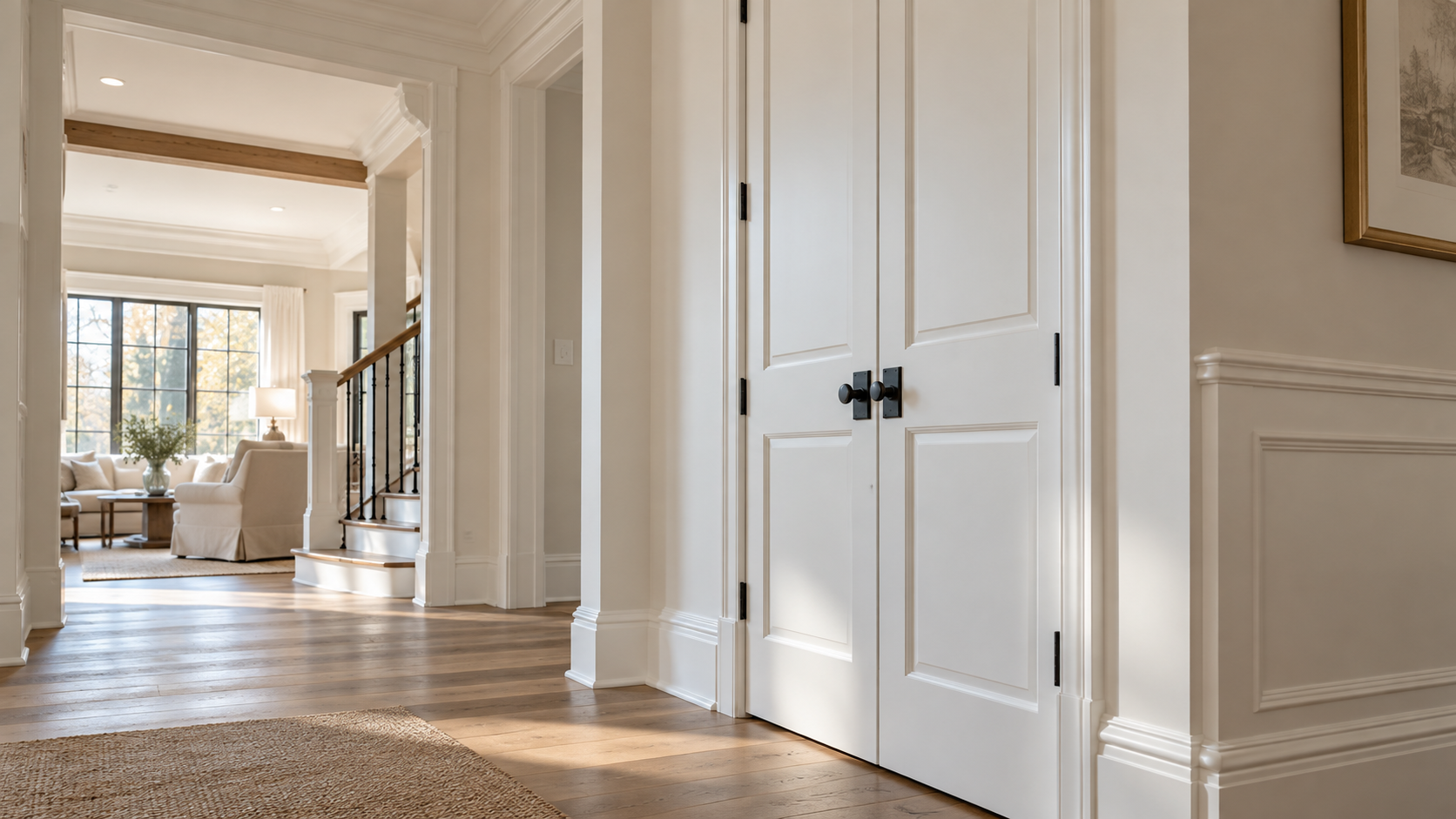
The Details That Make a Room Feel Complete.
Freshly painted walls can transform a room. But chipped baseboards, yellowing doors, and worn trim can make even a beautiful wall color feel unfinished.
Interior woodwork frames the architecture of your home. Baseboards create a transition between walls and flooring. Door casings define openings. Crown molding draws the eye upward. Interior doors contribute to the overall design.
When these surfaces are carefully prepared and painted, they help create a cohesive, polished appearance throughout the home.
However, painting trim and doors is often more demanding than painting walls. Existing finishes, surface damage, adhesion, brush marks, and product selection can all affect the result.
This guide explains what homeowners in Cumming, Alpharetta, Milton, Roswell, Johns Creek, and surrounding North Georgia communities should know before starting an interior trim and door painting project.
Why Painting Interior Trim and Doors Makes Such a Difference.
Interior trim is one of the most frequently overlooked elements of a home renovation.
Homeowners often focus on wall colors, flooring, cabinetry, and furniture while leaving existing woodwork untouched.
Over time, trim and doors may develop scuffs, dents, chipped paint, discoloration, or visible wear.
Repainting these surfaces can help refresh the entire room, even when the wall color remains unchanged.
Crisp, carefully finished trim helps create visual continuity between rooms and highlights the architectural details of your home.
Where Trim Painting Has the Greatest Impact
Entryways, staircases, hallways, living rooms, and kitchens often contain extensive woodwork that is visible from multiple angles.
Painting these connected areas consistently can make the home feel more intentional and cohesive.
Not All Interior Trim and Doors Are the Same.
Different materials require different preparation methods. Before painting, it's important to identify the existing surface and coating.
Wood Trim
Solid wood may contain grain, knots, previous stains, or existing paint that affect preparation and primer selection.
MDF Baseboards
Medium-density fiberboard provides a smooth appearance, but damaged edges and exposed material require careful preparation.
Previously Painted Doors
Existing coatings must be evaluated for adhesion, surface contamination, and compatibility with the new paint system.
Factory-Finished Surfaces
Some factory coatings are particularly smooth or resistant to adhesion, making cleaning, abrasion, and suitable primers important.
A successful project begins with understanding what you're painting, not simply choosing the final color.
How to Prepare Interior Trim, Baseboards, and Doors.
Surface preparation often determines whether a paint job looks smooth and lasts as intended.
Painting over dirt, grease, loose coatings, or damaged surfaces can lead to visible imperfections and premature coating failure.
Clean the Surface
Remove dust, grease, fingerprints, and other contaminants using cleaning methods suitable for the material.
Inspect Existing Paint
Identify peeling, cracking, adhesion problems, and areas of damage.
Repair Imperfections
Fill appropriate nail holes, dents, and surface defects using compatible repair materials.
Sand Where Appropriate
Smooth repaired areas and prepare sound existing coatings for proper adhesion.
Caulk Suitable Joints
Address appropriate gaps between trim and adjoining surfaces using paintable caulk.
Remove Dust and Protect Surroundings
Clean sanding residue and protect nearby flooring, hardware, fixtures, and walls before coating.
Homes built before 1978 may contain lead-based paint. Disturbing painted surfaces can require lead-safe work practices and compliance with applicable EPA renovation rules. Do not dry-sand suspected lead paint without appropriate precautions.

When Should You Prime Trim and Doors Before Painting?
Not every previously painted surface requires the same primer, but certain conditions make priming particularly important.
Bare wood, exposed MDF, stains, repaired areas, and glossy or difficult-to-coat surfaces may require a compatible primer.
Primer can help seal porous material, improve adhesion, and reduce the risk of stains showing through the finish coat.
Common Situations That May Require Primer
- Bare or exposed wood
- New or repaired MDF trim
- Water or tannin stains
- Previously stained or varnished woodwork
- Glossy coatings with adhesion concerns
- Areas where existing paint has been removed
The appropriate primer depends on the surface and the selected finish paint. Always follow the coating manufacturer's preparation and compatibility requirements.
What Is the Best Paint for Interior Trim and Doors?
Trim and doors experience different types of wear than most walls.
Baseboards are exposed to vacuum cleaners, shoes, furniture, and routine cleaning. Doors and frames experience frequent handling and contact.
For these reasons, products specifically designed for interior trim, doors, and cabinetry are often preferable to standard wall paint.
Sherwin-Williams Emerald Urethane Trim Enamel
Emerald Urethane Trim Enamel is designed for surfaces such as interior doors, trim, and cabinets.
It's one of the products Hopewell Painting uses when a durable, refined finish is appropriate for the project.
Product selection should always account for the existing substrate, coating compatibility, application method, and desired appearance.
What to Look for in a Trim Paint
- Compatibility with the existing surface
- Suitable adhesion and durability
- Good leveling characteristics
- Appropriate cleaning resistance
- The desired sheen and finish appearance
Premium paint can contribute to an excellent result, but even a high-quality product cannot compensate for inadequate preparation.
What Sheen Is Best for Baseboards, Trim, and Doors?
Paint sheen affects both appearance and how surface imperfections are perceived.
There is no universal best sheen for every interior, but satin and semi-gloss are common choices for woodwork.
Satin
Offers a softer, less reflective appearance while still providing a finished look suited to many interior trim applications.
Semi-Gloss
Creates more noticeable reflection and can emphasize architectural details. It may also reveal surface imperfections more readily.
For a modern transitional interior, satin may provide the understated appearance homeowners want.
In a traditional home with detailed crown molding and classic white doors, semi-gloss may be an attractive choice.
Compare physical samples under the room's actual lighting before making a final decision.
Beautiful Woodwork Requires More Than Beautiful Paint.
The final appearance depends on the entire process, not just the product selected at the store.
Surface Condition
Repairs, old coatings, and existing damage influence the finished appearance.
Preparation
Cleaning, sanding, filling, and caulking help create a suitable surface.
Primer
Compatible primers address adhesion, porosity, and stain concerns where needed.
Finish Paint
Choosing the right product and sheen helps achieve the intended appearance and performance.
Application
Appropriate tools and technique contribute to consistent coverage and smooth finishing.
Curing
Allowing sufficient time before heavy use helps protect the newly painted finish.
How Are Interior Trim, Baseboards, and Doors Painted?
Professional painters choose application methods based on the surface, project conditions, and desired finish quality.
Brush Application
High-quality brushes provide control around detailed moldings, narrow edges, and architectural features.
Roller Application
Appropriate small rollers can help distribute paint evenly across broader flat surfaces, such as certain doors and wide trim.
Spray Application
Spraying can produce a refined finish on suitable surfaces, but requires extensive masking, ventilation, and control of overspray.
Spraying is not automatically the best choice for every occupied home. Brushing and rolling may be more practical depending on the project layout.
The goal is not to use a particular tool on every job. It's to choose the method that produces the appropriate finish for the specific surface and conditions.
Why Drying and Curing Matter
Paint may feel dry to the touch before it has reached its full intended hardness and service performance.
Follow the product's recommended recoat and cure times, and avoid unnecessary abrasion or heavy cleaning while the finish cures.
Common Mistakes When Painting Interior Trim and Doors.
Painting Over Dirty Surfaces
Dust, oils, and other contaminants can interfere with adhesion.
Skipping Necessary Sanding
Some existing finishes require careful abrasion or other preparation before recoating.
Using the Wrong Paint
Standard wall paint may not provide the desired finish or performance on high-contact woodwork.
Applying Paint Too Heavily
Excessive application can cause runs, drips, and uneven texture.
Rushing Between Coats
Recoating before the manufacturer's recommended interval can affect the final finish.
Ignoring Existing Damage
Paint does not automatically hide dents, cracks, open joints, or peeling coatings.
Should You Paint Interior Trim Yourself or Hire a Professional?
Small touchups and straightforward trim projects can be manageable for homeowners with the right tools, patience, and preparation.
However, painting dozens of doors, extensive baseboards, intricate crown molding, or previously stained woodwork can become a much larger undertaking.
Best for Smaller Projects
May be suitable for simple, limited areas where the existing surface is sound.
- More personal time required
- Tools and materials to purchase
- Preparation is your responsibility
- Finish quality depends on experience
Ideal for Detailed Projects
Often beneficial when consistency, surface preparation, and extensive woodwork are major priorities.
- Experienced preparation methods
- Coating and tool selection
- Coordinated project execution
- Inspection of finished work
For large interior renovations or luxury homes with extensive architectural trim, hiring a professional painting contractor can help manage the complexity of the project.
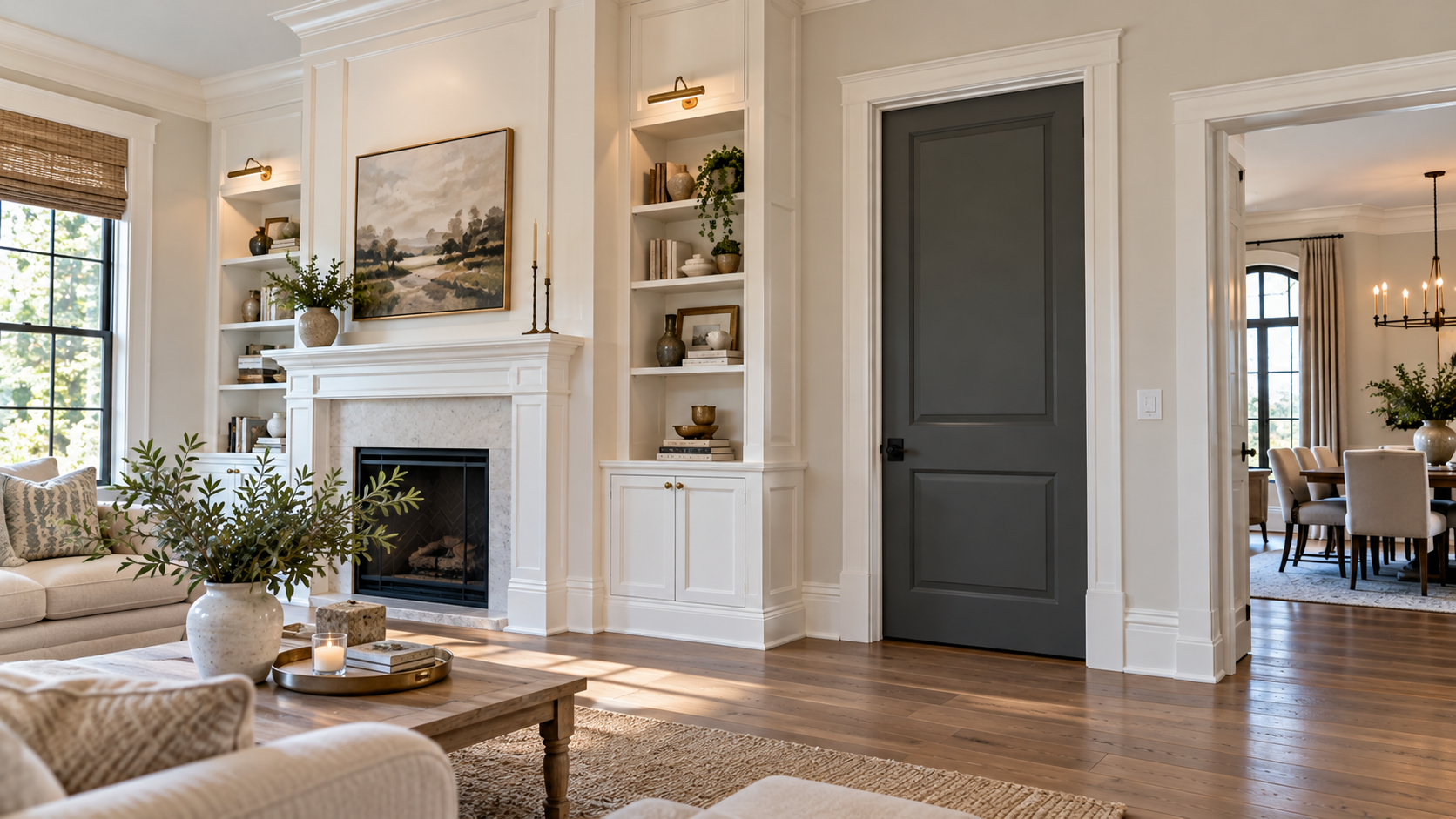
Your Interior Trim & Door Painting Checklist.
Whether you're doing the work yourself or requesting a professional estimate, these are the important decisions to make beforehand.
Frequently Asked Questions About Painting Trim, Baseboards, and Doors.
What is the best paint for interior baseboards?+
Products designed for trim and doors are often a good choice because baseboards experience frequent contact and cleaning. The appropriate product depends on the existing surface and finish requirements.
Should baseboards be satin or semi-gloss?+
Both are common choices. Satin offers a softer appearance, while semi-gloss creates more reflection. The best selection depends on your design preferences, product, and existing trim condition.
Do I need to sand trim before painting?+
Some previously painted or glossy surfaces require sanding or other preparation to promote adhesion. The exact method depends on the existing coating and surface condition. Use lead-safe practices when applicable.
Can you paint over stained wood trim?+
Often, yes, with appropriate cleaning, surface preparation, and a compatible primer. Existing varnish, stains, and wood characteristics must be evaluated before selecting the coating system.
Should interior doors match the baseboards?+
Matching doors and trim creates a cohesive appearance, but contrasting doors can also be a beautiful design choice. Consider the home's architecture and how colors connect between rooms.
Is it better to spray or brush interior doors?+
Both methods can produce attractive results when performed correctly. Spraying requires suitable conditions and extensive masking, while brushing and rolling may be more practical for some occupied homes.
How long does trim paint take to cure?+
Cure times vary by product, temperature, humidity, and application conditions. Paint can be dry to the touch before reaching its intended hardness. Follow the manufacturer's instructions.
Can Hopewell Painting paint all my interior doors and trim?+
Yes. Hopewell Painting offers interior door, baseboard, crown molding, window trim, and other interior painting services in Cumming, Alpharetta, Milton, Roswell, Johns Creek, and surrounding North Georgia communities.
Every Detail Contributes to the Finished Home.
Painting interior trim, baseboards, and doors is about more than refreshing the color.
It requires understanding the existing surfaces, preparing them correctly, selecting compatible products, and applying the finish with care.
When done thoughtfully, freshly painted woodwork can complement your walls, enhance architectural features, and bring a more cohesive appearance to your entire home.
For homeowners planning an interior refresh, these details are worth including from the beginning.
Ready to Refresh Your Interior Trim and Doors?
From baseboards and crown molding to interior doors and complete room repaints, Hopewell Painting provides carefully planned interior painting services with attention to every detail.
Request Your Interior Painting EstimateServing Cumming · Alpharetta · Milton · Roswell · Johns Creek · North Georgia
Because every detail matters.
