
Why Is My Exterior Paint Peeling? Common Causes in North Georgia Homes
Peeling exterior paint is more than an appearance problem. It is often a sign that moisture, failed caulk, deteriorated wood, surface contamination, or an earlier preparation problem is affecting the coating system beneath the color.
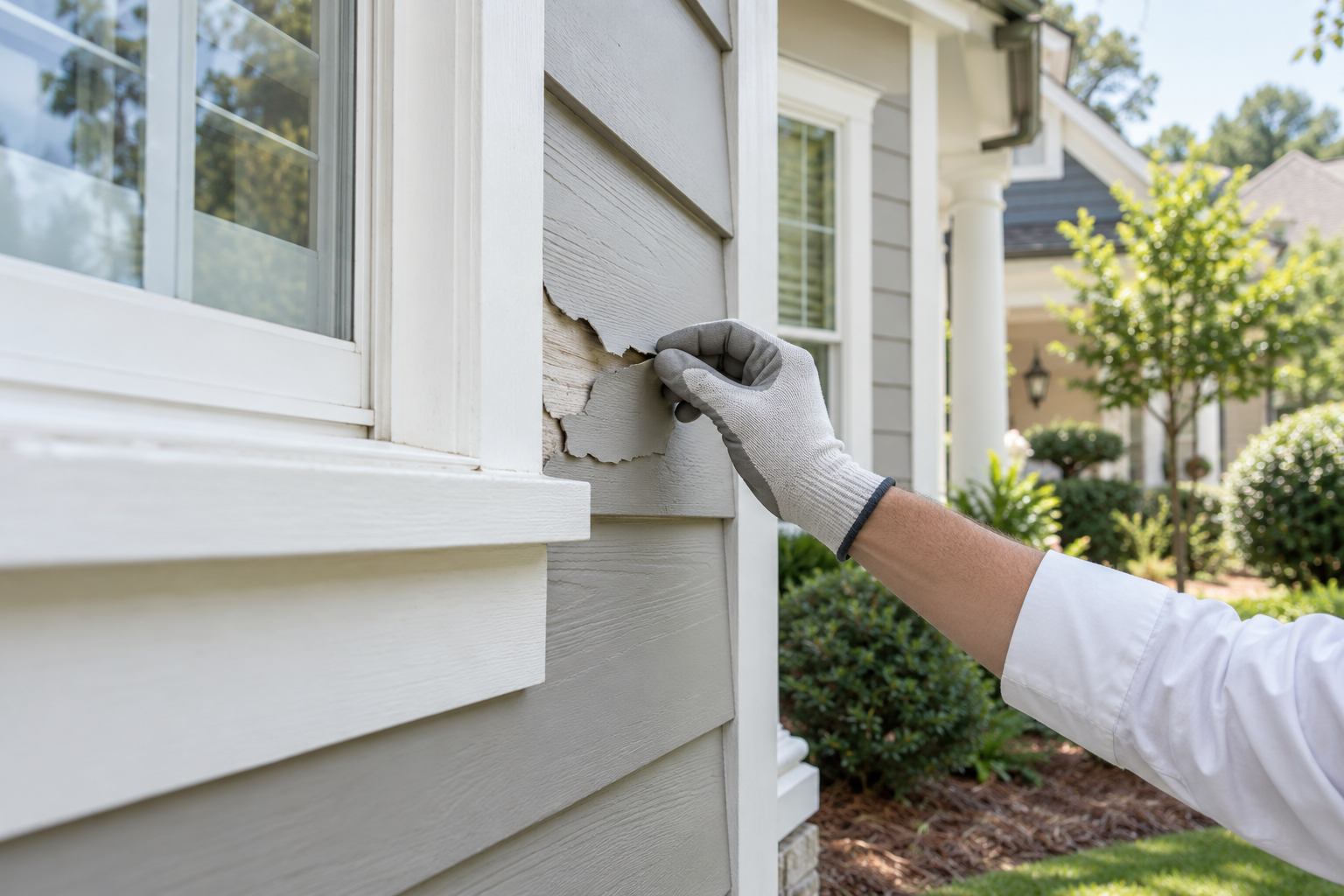
Find the Cause Before Repainting
Why Is My Exterior Paint Peeling?
Exterior paint peels when it loses adhesion to the surface beneath it. That can happen because moisture is pushing through the material, the substrate was dirty or unstable, bare areas were not primed correctly, incompatible coatings were applied, or the paint was exposed to unsuitable conditions during application.
North Georgia homes face humidity, heavy rain, intense sun, pollen, shaded elevations, and seasonal temperature changes. Those conditions do not automatically cause failure, but they expose weak preparation and unresolved building problems more quickly.
The lasting solution is not simply another coat of paint. The cause must be identified, corrected, and properly prepared first.
The Quick Answer
Paint Usually Peels Because the Bond Beneath It Has Failed
Paint performs best when it is applied to a clean, dry, sound, and compatible surface. If the old coating is loose, the wood is wet, the siding is chalky, or contaminants remain beneath the finish, new paint may only bond to the weak material instead of the house itself.
Peeling can be localized around windows, fascia, doors, and rooflines, or it can spread across an entire elevation. The location and pattern often provide clues. Failure below gutters may suggest water exposure, while peeling on sun-heavy siding may point toward aging, heat, or earlier application problems.
A professional inspection should look beyond the visible paint film and evaluate the substrate, joints, drainage, repairs, and previous coating system.
Read the Warning Signs
Peeling, Blistering, Cracking, and Flaking Are Not Identical
Peeling paint lifts away in sheets or curls because adhesion has been lost. Blisters form raised pockets that may involve moisture, heat, or trapped vapor. Cracking can begin as fine lines and become larger flakes as the coating ages or loses flexibility.
These symptoms can overlap, so the visible pattern should not be treated as a complete diagnosis. The surface may need probing, moisture evaluation, closer inspection of nearby joints, and limited coating removal to understand what is happening below.
Explore our exterior painting servicesPeeling
Paint separates from the layer or substrate beneath it.
Blistering
Raised bubbles form beneath the coating film.
Cracking
The coating develops lines that may progress into failure.
Flaking
Brittle pieces release as the coating loses integrity.
Moisture Is Getting Behind the Paint
Water can enter through failed joints, damaged siding, roof or gutter problems, unsealed penetrations, window assemblies, or repeated splashback. Moisture may also move from inside the building when ventilation is poor.
As moisture moves through wood or masonry and reaches the coating, it can weaken adhesion or create pressure behind the paint film. Repainting the surface before the moisture source is corrected often leads to another failure.
Staining, soft wood, swollen joints, mildew, and peeling concentrated below a specific feature are all reasons to investigate moisture before painting.
Caulk Has Failed Around Joints and Openings
Exterior caulk helps manage joints around appropriate trim connections, windows, doors, penetrations, and dissimilar materials. Over time it may crack, split, shrink, or release from one side of the joint.
Failed caulk can allow water into vulnerable areas, but applying more caulk over loose or wet material is not a reliable repair. The joint must be evaluated, failed material removed where appropriate, and the correct paintable sealant installed on a properly prepared surface.
Not every exterior gap should be sealed. Drainage paths and manufacturer-required openings must remain functional.
Wood Rot or Substrate Deterioration Is Beneath the Finish
Fascia, soffit, window trim, door frames, and lower trim boards can deteriorate after repeated moisture exposure. Paint applied over soft, delaminated, or decayed material does not have a stable surface to hold onto.
Minor localized defects may be repairable, while more extensive decay may require replacement. The correct solution depends on how deep the damage extends and whether the moisture source has been stopped.
Paint protects sound material; it does not restore structural strength to rotted wood.
The Surface Was Not Properly Cleaned or Prepared
Dirt, pollen, chalk, mildew, loose paint, grease, and other contaminants can interfere with adhesion. Painting over a weak layer means the new coating is only as secure as the material beneath it.
Proper preparation may include controlled washing, drying, scraping, sanding, feathering edges, dust removal, repairs, and spot priming. The exact process depends on the substrate and the condition of the existing finish.
Aggressive pressure is not a substitute for careful preparation and can damage siding or force water behind exterior materials.
Primer or Paint Was Incompatible With the Surface
Bare wood, metal, masonry, previously painted surfaces, stains, and glossy coatings do not all require the same primer. Skipping a needed primer or choosing an incompatible system can lead to poor adhesion, staining, rust, or premature coating failure.
A professional should identify the substrate and existing coating before selecting the preparation and product system. When the earlier coating is unknown, small adhesion tests may help guide the plan.
Premium paint cannot compensate for an unstable or incompatible foundation.
Weather Conditions Worked Against the Application
Paint needs suitable temperature, surface temperature, moisture level, and drying conditions. Rain arriving too soon, heavy overnight dew, a damp substrate, direct hot sun, or temperatures outside product requirements can affect how the coating forms and bonds.
North Georgia weather can vary across a single day. Exterior scheduling should consider the wall's exposure and drying window—not only the forecasted daytime air temperature.
Always follow the application limits and recoat requirements for the exact primer and paint being used.
A Lasting Repair Sequence
What Should Happen Before the House Is Repainted?
Map the failure and identify likely moisture, substrate, and coating causes.
Address leaks, drainage, failed joints, and deteriorated materials first.
Remove contaminants with methods appropriate for the exterior surface.
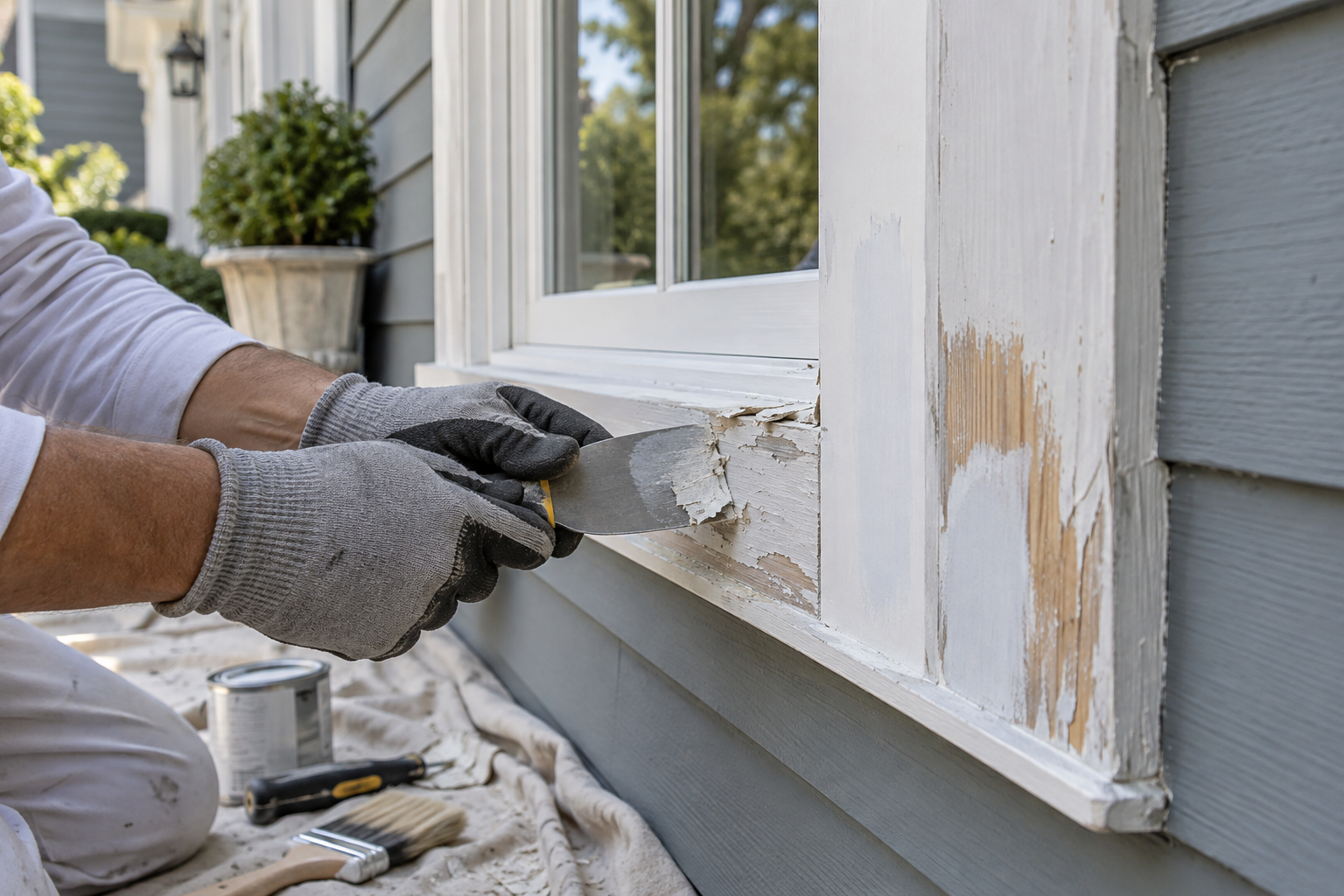
Scrape and sand loose paint to a sound edge without damaging the substrate.
Use the appropriate primer on bare, repaired, stained, or specialty surfaces.
Apply compatible exterior paint within the required weather and recoat windows.
Where the Paint Is Failing
What Can the Location Tell You?
The pattern offers clues, but a site inspection is still needed to confirm the cause.
Roofline
Fascia & Soffit
Failure may relate to gutters, roof runoff, open joints, or deteriorated wood.
Openings
Windows & Doors
Failed joints, water entry, hand contact, and older glossy coatings may contribute.
Large Areas
Siding
Chalk, moisture, poor adhesion, sun exposure, or coating age may affect broad elevations.
Near Grade
Lower Trim
Splashback, sprinklers, vegetation, and ground clearance can keep lower areas damp.
Professional insight: Repeated failure in the same location usually means the underlying cause has not been fully corrected.
Preparation Is the Repair
Why a Quick Scrape and Recoat May Not Be Enough
A small peeling area can sometimes be repaired locally, but widespread failure may require much more extensive coating removal and surface preparation. The estimate should describe the realistic level of preparation included instead of promising that every old layer will disappear under new paint.
Deep preparation takes time because each area must be taken back to a stable surface. Repair limits also matter: major hidden rot, structural damage, extensive coating failure, or hazardous older materials may require separate evaluation and change the original scope.
- Identify the source of the failure
- Define repair and replacement allowances
- Remove loose coating to a sound edge
- Prime exposed and repaired surfaces
- Apply the compatible finish system
The Bottom Line
Peeling Paint Is a Symptom—Not the Whole Problem
Moisture, failed caulk, deteriorated wood, contamination, weak preparation, incompatible coatings, unfavorable weather, and normal aging can all lead to exterior paint failure. More than one cause may be present on the same home.
A durable repaint begins with an honest inspection and a scope that addresses what is beneath the peeling film. Correct the source, create a sound surface, use the appropriate primer and paint, and respect the product's application requirements. That is how a cosmetic repaint becomes a lasting exterior project.
Common Questions
Exterior Paint Peeling FAQs
Can I paint directly over peeling exterior paint?
No. Loose material must be removed to a sound edge, and the cause of the failure should be addressed. Otherwise, the new coating may release with the unstable layer beneath it.
Does peeling paint always mean the wood is rotten?
No. Paint may peel from poor adhesion, moisture, contamination, age, or incompatible products even when the wood remains sound. Softness, swelling, crumbling, and repeated moisture exposure are reasons to inspect for rot.
Why does paint keep peeling around my windows?
Possible causes include failed caulk, water entry, deteriorated frames or sills, condensation, glossy older coatings, or inadequate preparation. The surrounding assembly should be inspected before repainting.
Will pressure washing remove all the failing paint?
Washing can remove contaminants and some loose material, but it does not replace controlled scraping, sanding, repairs, and priming. Excessive pressure may damage siding or force water behind it.
Does all old exterior paint need to be removed?
Not necessarily. Sound, well-adhered coating may remain after proper cleaning and preparation. Loose, failing, or incompatible material must be addressed according to the condition and project scope.
When should wood be replaced instead of repaired?
Replacement may be appropriate when decay is extensive, the material has lost strength, joints no longer hold, or repairs would not provide a stable painting surface. The moisture source should also be corrected.
Exterior Painting and Repairs in North Georgia
Is Your Exterior Paint Peeling, Cracking, or Blistering?
Hopewell Painting can evaluate the visible coating failure, preparation needs, caulking, and repair scope before recommending a repainting system. We serve Cumming, Alpharetta, Milton, Roswell, Johns Creek, and surrounding North Georgia communities.
Because every detail matters.
