
Limewash vs. Painted Brick: Which Finish Is Better for Your Home?
Limewash and masonry paint can both transform an older brick exterior, but they do not create the same look or behave the same way. The best choice depends on your brick, the existing surface, the amount of coverage you want, and how you expect the finish to age over time.
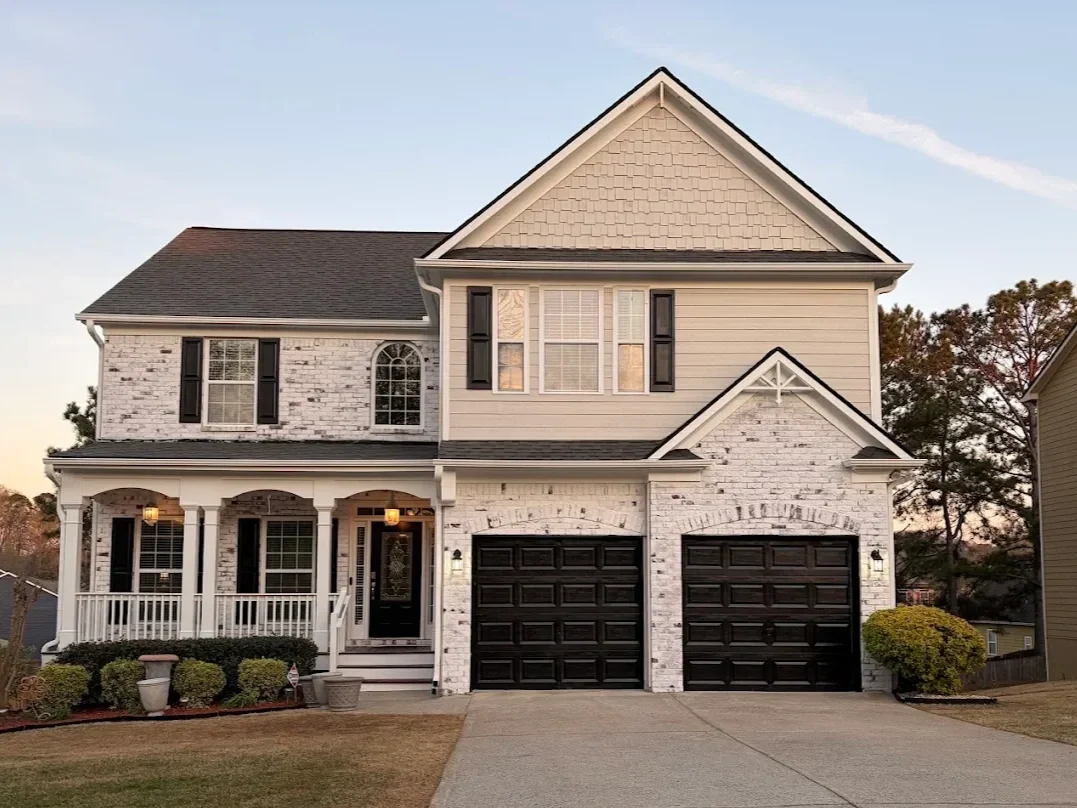
Two Beautiful Finishes, Two Different Results
Should You Limewash or Paint Your Brick?
Choose limewash when you want a soft, mineral appearance with natural color variation and some of the original brick character showing through. Choose masonry paint when you want a more uniform, opaque finish and a broader range of color possibilities.
Neither option is automatically better for every house. The right system must be compatible with the brick, mortar, previous coatings, moisture conditions, and the homeowner's design goals.
Before selecting a color, a professional should first determine what is already on the masonry and whether repairs, cleaning, or other preparation are needed. A beautiful finish begins with the condition beneath it.
The Quick Comparison
Limewash Enhances Brick. Paint Creates a New Surface.
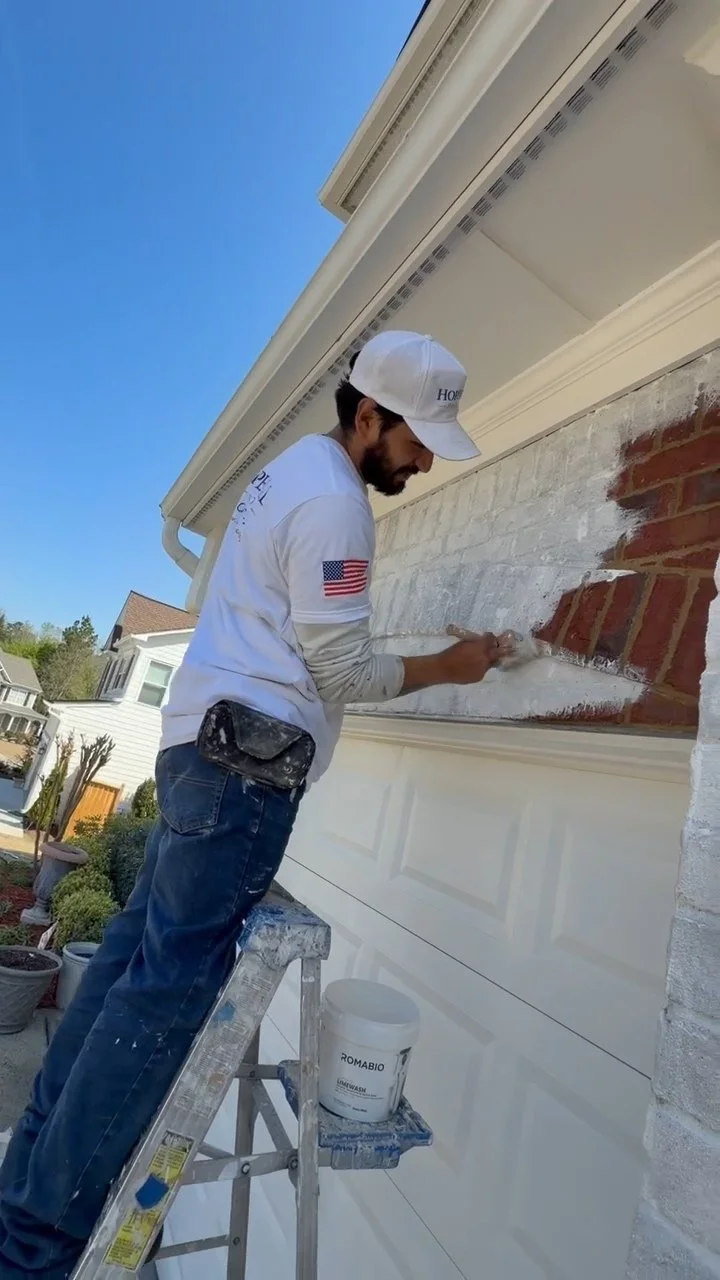
Traditional limewash is a mineral-based finish made primarily from lime. It penetrates and bonds with suitable uncoated masonry rather than forming the same type of continuous film associated with conventional paint. Its cloudy, dimensional appearance is part of the design—not an application defect.
Masonry paint is designed to provide more complete color coverage. With the correct preparation, primer when required, and a compatible exterior coating, it can produce a crisp and consistent transformation across brick and mortar.
Limewash celebrates variation. Paint emphasizes uniformity. Understanding that difference makes the decision much easier.
Begin With the Existing Surface
Can Every Brick Home Be Limewashed or Painted?
Brick condition and coating history matter. Bare, absorbent masonry may be a strong candidate for a mineral limewash, while brick that has already been painted, sealed, or coated may not absorb limewash correctly without a manufacturer-approved preparation or alternate system.
Cracked mortar, spalling brick, efflorescence, water intrusion, failed paint, and incompatible sealers should be identified before refinishing. A new finish can improve appearance, but it should not be used to hide unresolved masonry or moisture problems.
Explore our brick painting servicesPrevious Coatings
Paint, sealers, and older treatments affect product compatibility.
Brick Condition
Damaged or deteriorating masonry should be evaluated before coating.
Moisture Sources
Leaks and drainage problems should be corrected instead of concealed.
Desired Appearance
Variation favors limewash; solid coverage generally favors paint.
A Dimensional Finish That Lets Brick Feel Like Brick
Limewash is ideal for homeowners who want to soften red, orange, or brown brick without making the exterior look perfectly solid or newly manufactured. Depending on the product and application method, the finish can range from translucent and weathered to fuller and more consistent.
Variations around brick faces, mortar joints, corners, and architectural details create depth. Limewash may also develop more patina as it ages, which appeals to homeowners who appreciate European, Mediterranean, farmhouse, or historic-inspired exteriors.
Limewash should look intentionally varied. If your goal is perfectly uniform color from brick to brick, paint may be the better match.
A More Opaque and Consistent Exterior Transformation
Painting brick is often the stronger choice when the homeowner wants a defined color with more complete coverage. A properly selected masonry coating can visually unify brick, mortar, repairs, and color inconsistencies across the facade.
Paint also offers more flexibility when coordinating the brick with trim, shutters, doors, siding, gutters, and other exterior elements. The final appearance can feel classic, modern, dramatic, or understated depending on the palette and sheen.
Painted brick requires careful cleaning, repairs, product selection, and ongoing maintenance. Once brick is painted, returning it to its original appearance can be difficult and costly.
Limewash Is Not the Same as German Smear
Limewash changes the color and tone of masonry with a mineral coating. German smear uses mortar or a mortar-like material spread across the brick face to create a heavier, textured, old-world effect.
Both can create a rustic appearance, but German smear physically changes the texture and profile of the surface more dramatically. Homeowners should review full-size samples before choosing between these treatments.
Internet inspiration photos are useful, but the existing brick color and texture will influence how any translucent or partially covered finish looks.
Humidity, Rain, Shade, and Sun All Affect the Project
North Georgia exteriors experience humid summers, rain, pollen, shaded elevations, and strong sun exposure. These conditions can influence surface cleaning, drying time, application windows, and long-term appearance.
Landscaping, roof runoff, sprinklers, gutters, downspouts, and areas near grade should be reviewed before work begins. Persistent moisture or organic growth is a building-maintenance concern, not simply a cosmetic stain.
The application schedule should follow the selected manufacturer's temperature, moisture, and weather requirements—not a one-size-fits-all rule.
Professional Preparation
The Finish Is Only as Reliable as the Masonry Beneath It.
Identify bare brick, old coatings, sealers, stains, and repair needs.
Remove dirt, pollen, organic growth, chalk, and loose material appropriately.
Address failed mortar and damaged areas before applying the decorative finish.
Mask windows, roofing, trim, fixtures, hardscapes, and landscaping carefully.
Test color, coverage, and technique on the actual brick whenever possible.
Apply the selected system according to substrate and manufacturer requirements.
Side-by-Side Comparison
Which Brick Finish Matches Your Priorities?
Use the desired appearance as the starting point, then confirm that the existing masonry is compatible with the system you prefer.
Soft and Dimensional
Limewash
A mineral finish that softens the brick while preserving movement, texture, and portions of its original character.
Solid and Consistent
Masonry Paint
An opaque coating system for homeowners who want a more complete and uniform change across the brick and mortar.
Heavier Texture
German Smear
A mortar-based decorative treatment for a more rustic, substantial, and intentionally imperfect transformation.
Original Masonry
Keep the Brick Natural
Preserve the existing brick and refresh surrounding trim, doors, shutters, landscaping, or other exterior elements instead.
Professional insight: Do not choose the finish from a small digital photo alone. Approve a realistic sample on your own brick so you can judge color, undertone, coverage, and texture beside the roof, trim, and natural light.
Design the Whole Exterior
Coordinate the Brick With Every Permanent Feature
Brick is one of the largest visual surfaces on a home, but it is not the only one. The roof, stone, windows, garage doors, gutters, trim, shutters, and front door all affect whether the new finish feels cohesive.
Warm off-whites can soften traditional brick without appearing stark. Deeper charcoal or bronze accents can add definition, while muted natural colors may create a gentler transition. The best palette responds to the fixed materials already present rather than treating the brick as an isolated color decision.
- Compare samples in sun and shade
- Review the roof and stone undertones
- Decide how much brick variation should remain visible
- Coordinate trim, shutters, doors, and gutters
- Approve the sample before full application
The Bottom Line
Is Limewash or Paint Better for Your Brick Home?
Limewash is often the better choice when you want softness, movement, visible brick character, and a finish that can develop a natural patina. Masonry paint is often the better choice when you want stronger coverage, greater color flexibility, and a more uniform finished appearance.
The surface must still make the final decision. Existing paint, sealers, moisture, repairs, and the type of masonry can change which products are appropriate. A professional assessment and an approved sample help prevent an expensive exterior decision based only on an inspiration photo.
When the preparation, material, color, and application method all work together, either finish can give a North Georgia home a beautiful and intentional new identity.
Common Questions
Limewash and Painted Brick FAQs
What is the main difference between limewash and paint?
Limewash is a mineral finish that creates a soft, varied appearance on compatible masonry. Masonry paint provides a more opaque coating and usually produces more uniform color. The correct choice depends on the existing surface and the appearance you want.
Can previously painted brick be limewashed?
Traditional limewash generally needs a suitable absorbent mineral surface. Existing paint or sealer can prevent the expected bond. The brick should be inspected and the selected manufacturer's compatibility instructions followed before a system is chosen.
Does limewash always look distressed?
No. Coverage can range from translucent and weathered to fuller and more consistent depending on the product, dilution, number of coats, technique, brick absorption, and desired effect. It will still tend to show more natural variation than an opaque painted finish.
Is painted brick permanent?
Paint can be recoated, but restoring painted brick to its original unpainted appearance can be difficult, time-consuming, and potentially damaging to the masonry. Homeowners should treat painting as a long-term design decision.
Which finish requires less maintenance?
Maintenance depends on the product, exposure, preparation, moisture, and the appearance you expect. Limewash may weather in a way that is visually desirable, while painted brick generally needs maintenance when the coating becomes dirty, faded, cracked, or begins to lose adhesion.
Should I pressure wash brick before refinishing it?
The masonry must be clean, but the cleaning method should match the brick, mortar, contaminants, and selected coating system. Excessive pressure can damage masonry or force water into the wall, so professional evaluation and controlled preparation are important.
Brick Limewashing and Painting in North Georgia
Ready to Give Your Brick Exterior a More Refined Look?
Hopewell Painting helps homeowners compare limewash and painted-brick finishes, evaluate the existing surface, coordinate exterior colors, and select a system suited to the home. We serve Cumming, Alpharetta, Milton, Roswell, Johns Creek, and surrounding North Georgia communities.
Because every detail matters.
